Showing posts with label simulation. Show all posts

Wednesday, November 15, 2017

Time For My Nightly Patrol!


Oh for Pete's sake! He's right there! Behind you!
Looking over my "City of Crime" supplement, I was stricken by how some of the results aren't completely appropriate for all sub-genre's of superhero RPG'ing. While it was my intent all along to go in and tweak it at some point to offer a more "comics code friendly" option, I was still somewhat surprised at how squicky or grimdark some elements were. So I decided to go ahead and do it right now, and to  jail break it out as a separate thing.

"A Night on Patrol" focuses specifically on just the Districts of The City, the Patrol Encounter Chart, the Specific Crimes charts, and the Types of Rackets chart. It has been edited to remove crimes and situations that might be distressing or uncomfortable, and that would not typically show up in your average comic book.

So get out there now and patrol the city in a more genre appropriate way!

The Owl swoops!

Monday, November 13, 2017

"The Vigilante Hack" is HACK-TASTIC!


Love the cover for starters.

Once again, it's been a while since blarging. All the usual reasons, so no need to dwell on that. What I wanted to talk about is a little game that has motivated me in a big way: "The Vigilante Hack" by Eric Bloat from Bloat Games.

"The Vigilante Hack" (TVH) is a small indie RPG based on "The Black Hack" (TBH) by David Black. I'd heard of TBH when it made its big splash a little more than a year-and-a-half ago, but I didn't pay it much mind. "Another retro-clone" was my thought. Then I heard some talk of its Usage Die mechanic, thought "neat", and still didn't pay it much mind,

Then a few months back, TVH dropped. I was taken immediately by the stark simplicity of the cover, which I found quite striking. Reading the description, I kinda went "eh". Though I liked the sound of it, at the same time I have plenty of Supers games, and this one didn't sound like it did anything new or different than the others (and to be honest, it really kinda doesn't), so I didn't check it out right away.

Apparently I just wasn't ready at the time, or the mood wasn't right, or whatever. But the exposure must have went in by brain and stuck there, waiting for the right moment. I got to thinking about getting a Supers game going again, as I often do, but couldn't settle on a particular game, a particular sub-genre or setting, etc, also as I often do. Then I remembered TVH and a little something clicked. I looked it up on DriveThruRPG, saw that A) it had been marked down to a measly two bucks, and B) that it already had support material by way of a GM's Guide, "A City Full of Sinners" (aCFoS), also two bucks. For $4, two books? Why not?

Another awesome cover.

For starters, they motivated me enough to post about them on several of my G+ groups recently. They've also continued to motivate me enough that I've been feverishly working for a few weeks on a couple of projects in preparation for a campaign. Finally, the fact that they motivated me enough to get off my butt and blarg about them at more length and examine WHY they've motivated me so much is obviously proof that I'm glad I gave them a chance.

On the surface, they're deceptively simple. A mere 37 pages for the core book! Another 37 for aCFoS. 74 pages combined. Just 10 pages more than the sixty-four pages of Moldvay's Basic D&D, which is a high point for me in lean, mean, succinct game design, so this is not a bad thing.

The rules are pure, old school, D&D stripped down to its core for task resolution and combat, and removing the clunky sub-systems, thus making a small, lean rule set even smaller and leaner, & streamlined even further, with a few innovations (like the aforementioned Usage Die) & modern flourishes (Advantage/Disadvantage a la 5e). This is also not a bad thing, as reading it reminded me of all the familiar things that I LIKE about old-school D&D, familiarity and ease of play being among them.

One of the areas I think the game really shines in is in its look, presentation, and style. It has a certain feel, a certain vibe about it that sells the premise of the game.

Speaking of which, let's talk about the premise of the game:

"The Vigilante Hack is not a superhero game. While yes, some vigilantes in The Vigilante Hack are considered heroes and some wear costumes, including capes and masks, there is nothing “super” about them. They have no X-ray vision. They cannot run faster than cars. They cannot leap buildings in a single bound and they are not bullet proof. The vigilantes in The Vigilante Hack are normal people, the same as you and I, who have become fed up with the lawless individuals, thugs, organized crime and villains and have decided to do something about it! They have trained hard, sometimes to the point of obsession, and have struck back at those very people who are ruining their city. Think Batman, not Superman. Think The Punisher, not Spider-Man. Think Batgirl not Wonder Woman. Being a vigilante can be a thankless and even deadly calling. You may get arrested. You may pick a fight that you can’t win. You may find yourself looking down the barrel of a villain’s gun or you may even cross the line of right and wrong and become the exact thing that you started out trying to stop."

If this is what you want, this is what the game delivers. And that's ALL it delivers. Instead of trying to be all things to all people, it does the one thing it does, and does it simply and well in a rules-lite package.

This was what set off the light bulb for me: I didn't want to play a SUPERS game, I apparently wanted to play a VIGILANTE game. A MASKED HERO game. A COSTUMED ADVENTURER or MYSTERY MEN game. Calling it a "Supers" game is really a misnomer.

And by narrowing the focus, I found this liberating. When contemplating a Supers game, I think I was overwhelmed by choice . By limiting the focus and saying "There are no superpowers. Everyone in this game is a regular human", I suddenly felt relieved. Even if I had attempted to play this kind of game with other rule sets, it would have felt like I was missing something, both because of how those games scale to handle superpowers, and just the fact in the back of my mind I would be aware that they're there. By saying "This is not what this game is about" it suddenly made me feel OKAY about it. It gave me permission to play this kind of game. By eliminating all other choices it set me free.

This is "Watchmen" without Dr. Manhattan. It's "Kick-Ass" by Mark Miller. It's the DCU if it only consisted of The Batman and Family, The Green Arrow and his related characters, and so on.

Again, this is not a bad thing. It seems to have resonated with me in some of the same ways that recent shows like "Daredevil" and "Arrow" have with viewers. It levels the playing field between the heroes and the criminals they will do battle with. Makes them more of a challenge. Suddenly the common street criminal or mobster seems like more of a threat. I like that. It also brings the genre back to its pulp adventurer roots in a way I also like.

So all that said, I've finished the two projects I was working on. The first was adapting a set of (hopefully easy to use) but very detailed Hand-to-Hand and Gunfire Charts to add flavor to (modern) d20 combat. The second I'm very excited about, as it's a project I've wanted to tackle for a while. It's an adaptation and expansion of various Patrol and Crime, charts, both published and online, to give a Patrol System for the types of situations a crime fighter would encounter on their nightly patrols.

With the completion of these, I'm ready to start my campaign! Speaking of which, next time I'll share the details of the campaign setting I've brainstormed thus far. I'd also like to share a few other Black Hack games, resources, and "Additional Things" that I'm adding to season TVH to taste.

Until then! 

Saturday, February 20, 2016

All the world's a stage, And all the men and women merely players...And one man in his time plays many parts...

Thus Spaketh The Bard
While I was posting over at RPGGeek.com about my sessions of "Monsterhearts" that I ran over the past couple of weeks, I put into writing one of the thoughts that had been rolling around in my head about the experience:
I do have to say that once I got started I felt less like a player & more like a GM than usual. I felt like a director of a movie or stage play, and all the characters felt more like actors. I felt like I was staging the scenes & giving the actors some direction on where I wanted them to go and what I wanted them to do, & then it felt like "they" were taking it & running it.
Now, that said, I never felt completely divorced from the action, nor ever felt I wasn't in control of my character. I just felt like I was viewing the whole thing through a different lens, as it were.

So, I'm starting to think, in general, this might be a better way to look at Solo RPG'ing than my attempts at simulation, emulation, and "virtual reality", which I have discussed in the past.

I have achieved  this level of detail in the past, but the amount of work it takes can be exhausting, and I'm not quite sure that the amount of effort is equal to the reward (at least on a full time basis).

In these sessions of MH, what I was playing felt more like a TV Show, movie, or book, and less like "stepping into my character and living vicariously through them".

But I'm okay with that.

At some point perhaps you have to accept the limitation and conditions of the medium, and tailor your style of play, as well as your expectations, to meet them.

By framing and playing out scenes in a more cinematic, "only film when something interesting is happening"/"cut to the action" and less an attempt of trying to live the characters life, (as well as using a lighter, more story and narrative driven set of rules), the play may have been more fluid & dynamic, and at the least was just as engaging and entertaining as my previous efforts.

So, it may not be just the rules, tools, and so on, but how you frame and conduct your scenes, as well as your approach and mindset to what it is you're doing, and how you view it, that can  influence the feel of the finished product.

Friday, February 5, 2016

You Must Unlearn What You Have Learned...

That face you make when a Solo RPG session goes right...

Reading over, learning, and thinking about the game Monsterhearts as discussed in my last post has been a bit of a revelation. The big turning point has been an Actual Play video recommended to me by the ever excellent +Alex Yari...


The thing that REALLY stood out for me in this video is how spontaneous and improvised the game play is! How little prep appears to be needed. How all of the action and story is driven by player agency.

As an O.G. (Old Gamer) all of that runs contrary to my experience, which usually dictates having lots of material prepped to attempt to cover any contingency. I found myself drifting into this pattern of thinking, telling myself that I was planning on bringing "old school sensibilities to a new school game."

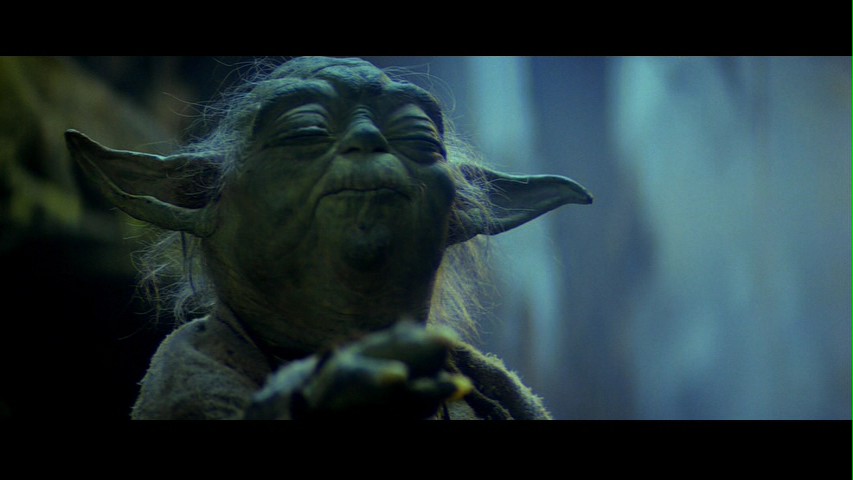
Hence the words of wisdom from the Jedi Master in the title. The above video was really illustrative to me of the difference in style of play, and how potentially freeing and liberating this could be.

The other thing that really hit me (and from what I see and know this is one of the hallmarks of new school indie games) was how the roles between players and GM have been reversed in some ways.

In old school games, the GM is the one who creates the story, tells the players what is happening, and so on. It's a proactive role. The players then are placed in a reactive role where they respond to what the GM tells them or does, rinse and repeat (perhaps an oversimplification here, but more or less).

What was really striking for me in the above video is how much the PLAYERS drove the story and wove the narrative, and how in many ways the GM role was more REACTIVE, asking lots of (leading) questions as a means to drive the story, rather than TELLING.

I'd heard this was the rap on newer indie design, but this made the whole concept "click" for me.

Of course this may all be irrelevant in Solo, as technically you're wearing all the hats to some extent(or emulating another hat wearer in others), but I think it's useful to understand the play style and how the game(s) function so that you know exactly what it is you're emulating.

Speaking of which, I have more thoughts on that, but I'll save them for next time. :) 

Saturday, October 31, 2015

How's the Weather? And Now, The News... (Superhero Sandbox Thing Pt. 3)

Weather helps evoke mood and atmosphere

As I work on compiling and creating Random Mundane City Street Urban Encounters/Dressing I remembered yet another piece of verisimilitude  that served me very well in the D&D Sandbox that would be equally useful here, not only for adding color, flavor, and realism, but could also add some fun complications.

I'm talkin' 'bout The Weather.

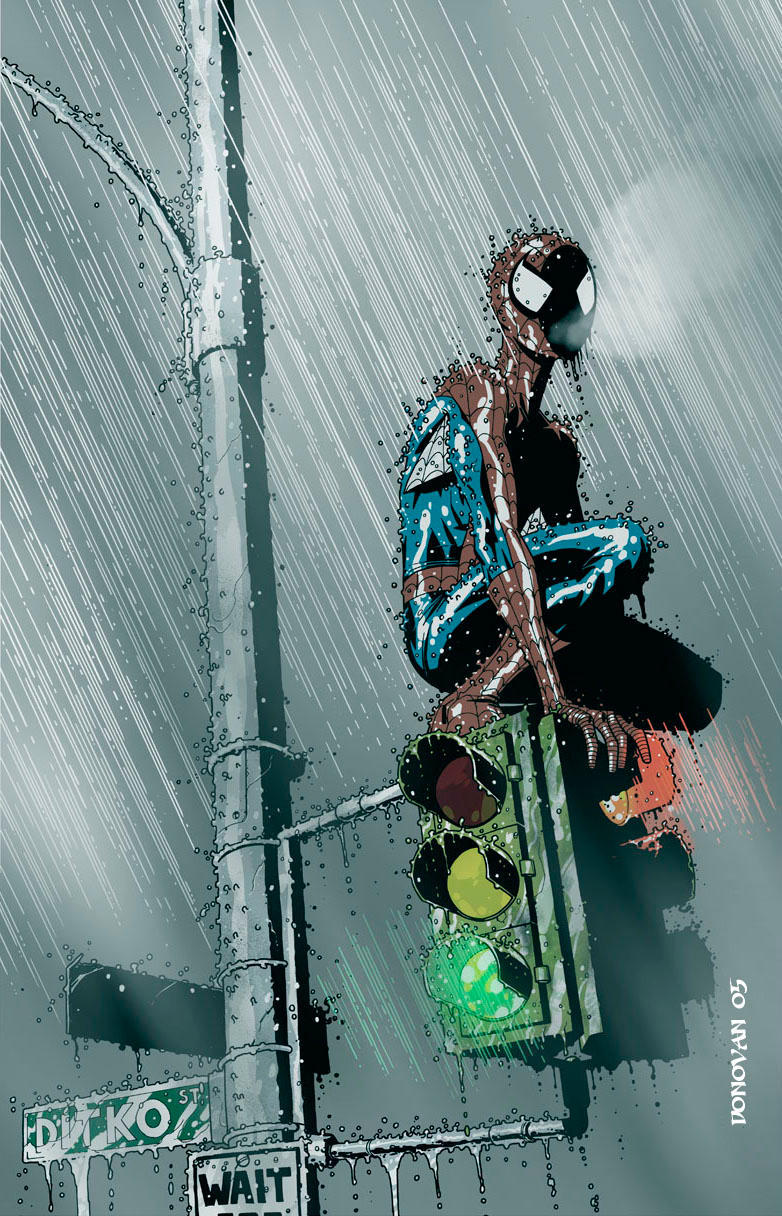
As seen in innumerable comics, shots like the one above can really lend flair and authenticity. Fortunately, weather charts are a LOT easier to come by than the aforementioned ones in the last post. I already have a favorite weather chart, that, while created for Warhammer, is really pretty system agnostic.

Now, right after that, while still working on the random encounters, another thought hit me as to a great tool to add to this "process" I'm brewing up to not only add more set dressing, but possibly add an easy "in" or hook for adventures:

I am referring to Newspapers.

Fair and Balanced?


I looked around for a while on line for Newspaper Headline Generators that would generate serious, crime and other news related blurbs, but with no luck. But really, one could sit down with any favorite Adventure Generator and whip up a plot that is the focus of the headline. And now your hero has a hook to start investigating. Maybe it ends up being the focus of the adventure, maybe while heading out for the day/night to begin the investigation something ELSE occurs and the story in the paper falls by the wayside.

My idea is that such a feature shouldn't turn up ALL the time, more like a Random Encounter. SO,  Roll 1d6 each day to see if there's anything interesting in the paper, with "1" = Yes. (Maybe +1 for each uneventful day until SOMETHING happens? This IS the Big City after all,,,)

So the Procedure I'm picturing for a Daily Routine as originally pictured in the first post in this series probably looks something like this:

  1. Roll for Dependent NPC's, Hunteds, etc.
  2. Roll for Weather, roll for duration (as needed).
  3. Roll for Interesting Headline in the Newspaper. (Generate as needed)
  4. Roll on Patrol Encounter table for each "area" moved through/entered.
  5. If no Patrol Encounter generated, roll for Random Encounter,
  6. If no Patrol OR Random Encounter occurs, roll for City Dressing/Mundane Urban Encounter
  7. Roll for Random Encounter (as per #5) to see if any Encounter occurs AT the Destination. If     not, conclude your business there and then repeat 4-6 as you travel to your NEXT destination,   out on your daily/nightly patrol, or just back home.
If doing a Daily/Nightly Patrol, repeat #4-6 for each area/hex/block/borough moved through. 

If simply travelling to/from point A to point B (like on the way to school, job, date, etc) then repeat 4-6 until you reach your destination (#7)

 (Or maybe just one set of rolls of 4-6 on the way from Point A to Point B if you want a more relaxed pace. As I haven't tied this yet, I haven't decided, BUT I'm thinking I'd rather only do the more frequent rolls while PATROLLING and only single sets when TRAVELING).

Following the above, I think I've got the formula to play out "a day in the life" of a Superhero whenever it suits me. 


Friday, October 30, 2015

You know what this town needs?!?!? (Solo Superhero Open World Sandbox Hexcrawl Pt. Deux!)

NOT what he said!


In my last post I laid out my ideas on what I think it would take to make such a beast as a Solo Superhero Open World Sandbox Hexcrawl run, as well as all of the links to blog posts, random tables, and so on that I've armed myself with for such an undertaking. But it occurred to me that I've left out one VERY IMPORTANT element (in my mind, for me, I can't stress HOW important):

City or Urban Dressing.

Call them set dressing, set pieces, stock footage, color, flavor,or whatever you like. I've found in my D&D Solo Hexcrawl that they've been a crucial element at adding that oh so important verisimilitude that I crave. Charts and tables full of little slice of life bits that just add color and flavor as you pass through an area (and that JUST MIGHT lead to something more if you start asking Mythic the right questions, roll a juicy result on a Rory's Story Cube or whatever).

Not the big Random Encounter type results mind you, just little, mundane, everyday details (with a little color and flair).


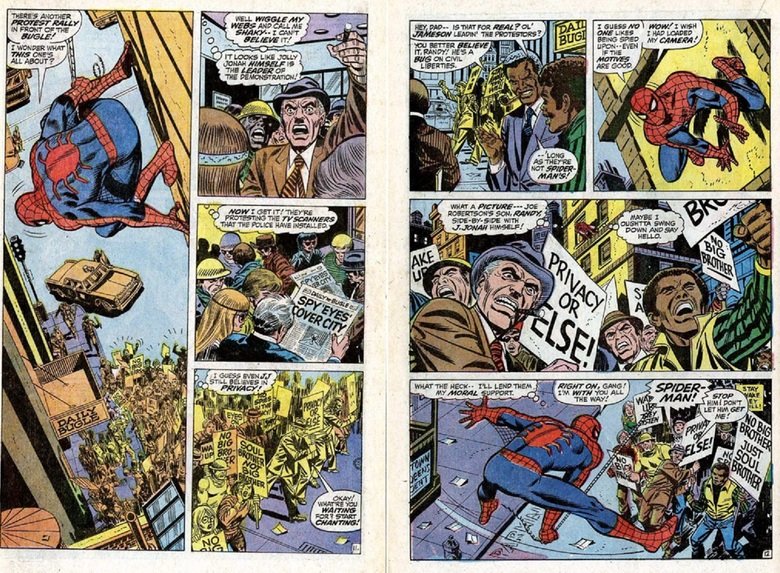
This is what I want MY city to be like...


...and this....


...or this...


...or even this, and so on.


Raging Swan Press makes a great series of them for D&D/Fantasy RPG's that I highly recommend...


But when I SCOURED Teh Webz for modern, urban/city dressing, random events, etc I found NEARLY BUPKIS!!! There is ASTONISHINGLY less support for pretty much any other genre you care to name COMBINED than there is for the monster that is Fantasy. *sad face*

Now, I did find ONE product that is (more or less) exactly what I had in mind "100 Modern Happenings On A City Street" ...


and found a long series of forum posts that has a lot of good ones (but it'll take some time to comb through and separate the wheat from chafee).

Beyond that, surprisingly little! So, I guess I know what I'm working on this weekend!


Wednesday, October 28, 2015

Superhero Open World Sandbox Hexcrawl!

Let's play!

So this post may be a bit all over the place and random, as my thoughts are a bit scattered on the subject, but I will at least try to cram as much stuff in as I can that I have located on the subject of, and that I'd like to use for, a Superhero Open World Sandbox Hexcrawl, along with my ramblings on the subject.

First, I had a bit of a revelation in the past couple weeks thinking on my beloved Champions. I have a suspicion that one of the great unsung heroes of Champions game design could end up being a crucial piece of the type of game I'm looking to play. I'm talking about Disadvantages.

If you're not familiar with Hero System games, character creation is a point buy system. You're given a starting number of points for free, but in order to have enough to build an average character you have to make up the balance with Disadvantages. It's a neat system that helps build a background for your character while handing the GM juicy plot hooks.

There are a couple of types among the various Disadvantages that I have in mind in particular. These are Hunted's and Dependent NPC's 

Hunted's are individuals or organizations that are actively pursuing your character. Dependent NPC's are those regular folks who rely on the hero for their care and well being. There are a few different criteria that determine how many points you earn for both (how weak or capable they are, and so on), but the one I have in mind is FREQUENCY. Both of them have a chance of showing up each session (8, 11, & 14 or less on 3d6), rolled by the GM. An appearance need not mean combat or endangerment, just that person(s) will figure into the session somehow.

I always thought this was one of the areas Champions outshone the competition, and always felt like games like Marvel Superheros could have used it. ( Aunt May, Dependent NPC: Amazing (50). Red roll? Uh-Oh, Aunt May is going to be in danger! Maybe Green is a phone call, Yellow a personal appearance, that sort of thing).

If I end up playing Champions this isn't a problem, but regardless of system, I want to front load my sessions with a chance of Hunted's, Dependent NPC's, and the like. These could then be worked in when relevant results show up on your Random Encounter Tables (see below), or when your Game Master Emulator of choice (like Mythic GME) throws you a Random Event or an Altered/Interrupted Scene, and so on.

(This may not be much of a "revelation" for most, but it was for me, in that as kids we never really used ALL the rules from Champions (Endurance, I'm looking at you!). We were pretty lazy about Hunted's, Dependent NPC's and so on. If we were running an adventure with Genocide, and you're HUNTED by them, well, they're going to target YOU. Otherwise, we just ignored them. We we kids...)

***

Next, I'll address a question that seems to come up a lot in various online discussions I've Googled up on the subject, which is: why does a Supers game NEED a hexcrawl in the first place? It's not a bad question.

For me at least, it all goes back to subjects I've discussed in previous posts: Immersion, realism, simulation, verisimilitude. I want the world to feel REAL. INTERACTIVE. Not only do I want a GAME MASTER EMULATOR for solo play, I want a WORLD emulator as well.

It would be pretty easy to just plunk the hero down in the city and roll up a random encounter. But I want more of a city that feels like it has all these things going on around me.

SO...that said, simple random encounter tables aren't enough for me. As I'm patrolling different parts of the city, I want greater or lesser chances of encounters, types of crimes, that sort of thing. IMO this will help make the city feel REAL and ALIVE.

One of the games I've heard recommended a lot for this style of play is also the FIRST Supers game: Superhero 2044. It incorporates planning sheets for you to block out how your hero spends their time and charts to roll on for patrols and so on. Very simulation-ish. Okay, sounds promising.

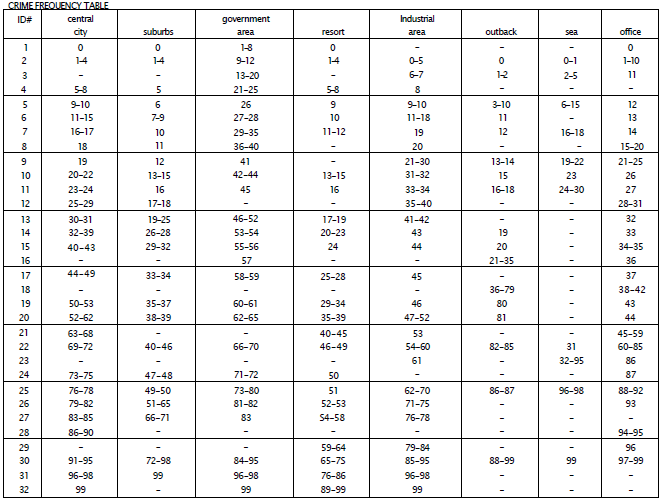
I managed to track down a PDF. The results...? Well...I got a headache, and a couple of nifty charts anyway...


I won't go into much detail on how these are used in the game, as I STILL don't quite grok how it works, other than to say it all boils down to a random die roll to see if you stop the crime, make a conviction, and so on, with a bunch of modifiers and mathematical formulas. Snore.


BUT, that chart for determining types of crime by area patrolled is pretty awesome. It reminds me of another one I found at Republic of Replicants from the DC Heroes RPG supplement Night In Gotham:


Add that to this map from IO9 that is keyed with the 24 boroughs on the chart above:


And you're off to a great start on prowling the city looking for crime.

***

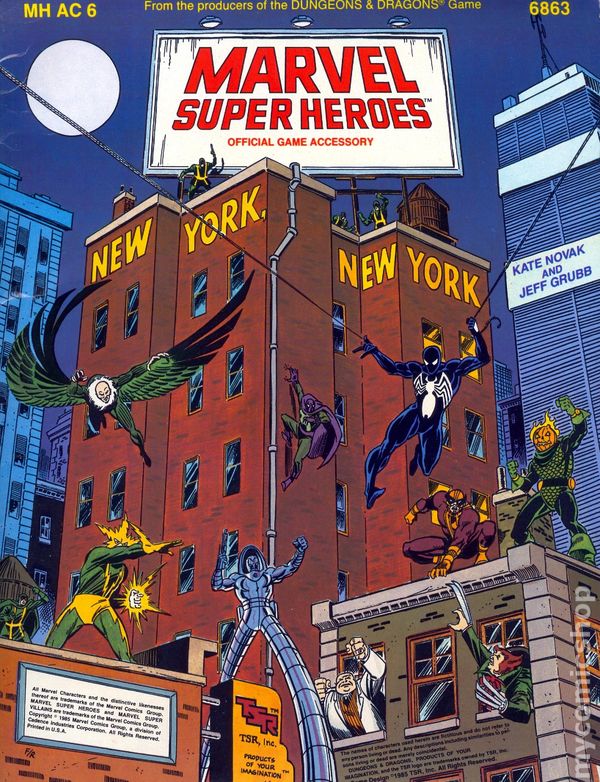
Marvel Superheroes has a pretty good one too, in the accessory New York, New York
that you can get for free at Classic Marvel Forever

This one runs more of a gamut, incorporating Daily Life, Miscellaneous Crimes, Robberies, Burglaries, Rampage, Vendetta, Organized Crime, and Catastrophes. It's closer to what I think of as a Random Encounter chart.

Which brings me to Random Encounters. I have nothing against them. Heck, I love them. I think they're just the spice a sandbox needs. So while the ones above and to the right would be good for "hex stocking" tables as you move through the city, I also think a Supers Open World Sandbox Hexcrawl would need true Random Encounters.

In my mind the Random Encounters in this type of game would be more of your "big" encounters. Supervillain attacks, Alien Invasions, and so on.

Fortunately there are several good ones I've scoured up in my  searches of the internet like the DC Heroes RPG one linked to above at Republic of Replicants or here's a good one for sale at Drive Thru RPG...

Worlds of Pulp: Generic Random Event tables for Super Heroes


The thing that makes the Wandering Monster/Random Encounter work in D&D is the simple 1 in 6 on d6 (or 1-2 in some cases). So I'm picturing something like that here. Each "hex" (borough, neighborhood, whatever) you move into or through you would check on your Patrol Encounter Table. No crime in the area? Roll for Random Encounter. If one is generated, roll on Random Encounter Table.

I haven't decided on frequency though. In D&D, for Wilderness you check 3-4 times per day. In a Dungeon it's every other turn for Wandering Monsters. Every other "hex" could be a good metric here?


***

So, overall the basic procedure would look something like:

1. Check for Hunted's, Dep NPC's etc. at beginning of session.
2. Roll on Patrol Encounter table for each "area" moved through/entered.
3. If no Patrol Encounter generated, roll for Random Encounter every other "area".

Between this procedure and all the randomness your GM Emulator of choice (like Mythic) throws at you, plus any and all other oracles you might employ ( like Rory's Story Cubes) SOMETHING has to happen! If not either you're not looking hard enough for trouble, or it just wasn't meant to be. Go back home and go back to bed.

Needless to say, all of this is only if you're just out patrolling the city, on your way to work, whatever. If you have a specific mission or agenda from a previous session or whatever then obviously that would take precedent (unless you WANT to add the chance of added complications. Could be fun!)

***

As a bonus, here is my collection of all the most useful blog posts and downloads that I've gathered on the subject (in addition to the ones already posted above!).


Blog post on Superhero Sandboxes by Jeff Rients

Alien Shores blog posts on Sandbox superhero campaigns (3 parts. Recommended!)

Rogues and Reavers blog: New York, New York inspired Campaign Frames


Random Encounter Tables for GM's by Ty States

Polyhedron Magazine article collection for MSH. (Of note are the articles "Constructing a Solo Campaign" from issue 80 and "Constructing Random Adventures" from issue 91)

CRIME SCENE written by A. Bigwood QUICK SCENARIO GENERATOR FOR CHAMPIONS OR ANY OTHER RPG

Heroes Unlimited Random Encounter Table

Elfmaids & Octopi blog: River city encounters for Marvel Super Heroes

Mutants & Masterminds Random Events (pg 6)

CrimeTable+Toolkit for Icons

*EDIT*

I wasn't even aware when I drafted this list and post, but apparently +John McMullen  was already ON this track before I was, hitting on some of the same thoughts regarding Random Tables and Disadvantages back in JUNE! Check it HERE.

+StevenLincoln also gave me a tip to a great City Blocks Generator, that while intended for Sci-Fi/Cyberpunk, could work great in this context with minimum tweaking.


Friday, October 2, 2015

...of Simulations and Sandboxes

By George, I've GOT it! (I think...)
While stuck at work on a slow Friday night, I've been mulling over the "What I Want To Play" series (#4 is sitting half finished in draft now), D&D, & RPG's in general, when I had another minor epiphany.

While thinking on some of the other games I'd like to play that I haven't covered yet versus D&D, two words burbled up from my subconscious that have been rattling around in my head for a couple of weeks now:

Simulation.

Sandbox.

While re-reading the 4th edition "Pendragon" RPG (one of those "Games I'd Like To Play") and looking up things online in regards to it, I stumbled across one quote that said (paraphrasing from memory) that "Pendragon was less of a RPG and more of a simulation" due to its system of Virtues and Vices to ensure that characters behave in a certain, consistent way, to their beliefs and character.

..."less of an RPG and more of a simulation." I rather liked the sound of that.

I think one of the things I've been consciously seeking, without necessarily being AWARE of it per se, is simulation in my RPG's. I want tables and rules that run the world and everything that happens in it, other than my character. (Hence my recent comment that I want my games to be "virtual reality" and that I want "to control my character, and the game to control everything else".

I know one of the reasons, among others, that I chose D&D for my first Solo was the huge amount of material available for it. Random tables for nearly any occasion and situation if you look hard enough. I think this is one of the reasons it worked so well. That kind of plethora of material powers the Simulation.

The other thing I want (that I've been more aware of) is for all of my games to be like a sandbox. Less "sit down & just have an adventure" and more "go anywhere, do anything, live the life of my character". Again, this is why D&D worked so well. Plethora of material, fits the style of play.

And I think this is also why I've had such problems otherwise (except for the "Monster-of-the-Week thing, which by its NATURE is episodic, thus I DON'T want or NEED a Simulation OR a Sandbox).

The problem I've been having is I want a bunch of the other games I'd like to play to be Simulation Sandboxes.

Star Trek? I wanted to live the life and career of a Star Fleet officer fresh out of the academy with an open world space sandbox to explore and unfold around me.

Superheroes? (Another genre I'd like to be playing) I want an open world sandbox simulation city where my character can and go and patrol like Spider-Man and crimes, events, and THINGS just HAPPEN, while maintaining a personal life, a secret identity, and so on.

Now, to be fair, I have scoured far and wide on ye olde intrawebz, and HAVE acquired a fair number of resources for both of the above (and maybe a few others). Supers in particular I was able to amass a decent collection of "stuff" to enable this type of play.

But for some reason I think I've had a harder time of wrapping my head around a "hexcrawl" sandbox-y style of play for the above. (Though I feel like I'm close to a breakthrough on a Supers game...there's something in my subconscious that just feels like the pieces are ready to fall into play and make sense...)

With D&D, there is so much material available, and sandboxing and hexcrawling are such well trod paths, that it wasn't a huge stretch to get started, to figure out what to do, or how to do it.

With others, even though there IS material available (as stated above), there is still lots of prep to be done, and the style of play for these genres feels like strange, uncharted territory, that when contemplating, I've had trouble figuring out where to start, how to approach.

I don't know if I have any point to make. Just thinking "out loud" here. But I think quantifying and qualifying, putting a label on,  what it is you're trying to do in Solo RPG-ing (and maybe life in general, really) helps in some way to accomplish it. When you do so, it clarifies, sets guidelines, expectations, helps identify what the challenges actually are.

Maybe now that I have a clearer idea of what it is that I really want to do I'll have an easier time figuring out how to do it.