Showing posts with label deep thoughts. Show all posts

Saturday, October 13, 2018

Ensemble Casts, & Proactive vs. Reactive in Solo RPG's

Ensemble Cast
Since it's October, and Halloween is just around the corner, my thoughts usually turn to Horror this time of year (not that they every really stray too far from it to begin with...).

When my thoughts turn to horror (gaming) I invariably get back around to pondering one of my favorite sub-gene's of horror: The Slasher Movie. I've pondered over how to run one of these as a successful Solo venture before, and have been doing so again as of late.

I'd come up with what I think may be a solution to some of the issues I've foreseen when I got side-tracked last night by Netflix's release of their new series "The Haunting of Hill House" which led me to one of the OTHER sub-genre's I brood over when this mood comes around: The Haunted House, which I'd also like to run.
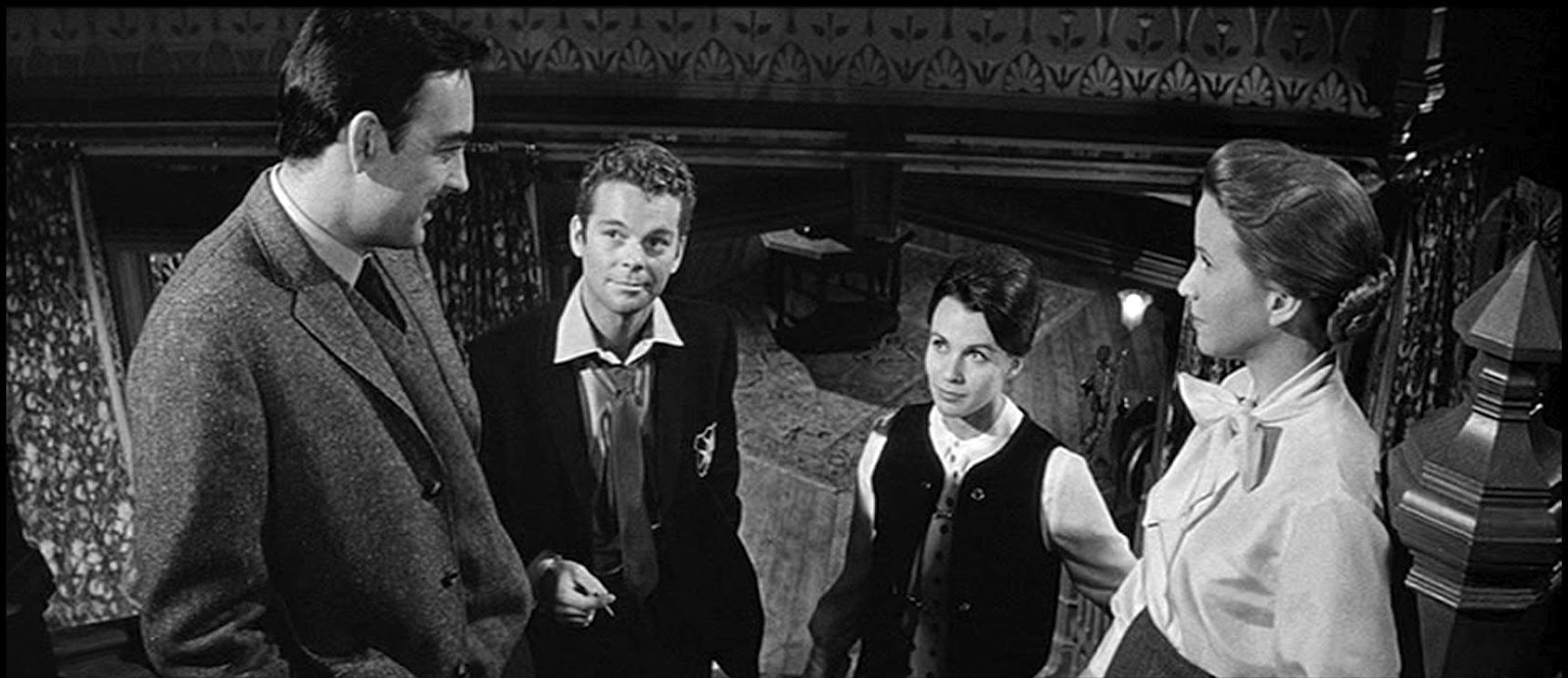
The ensemble cast of 1963's "The Haunting", the great adaptation of "The Haunting of Hill House"

The solution I've come up with addresses some problems that I now realize BOTH have in common. One is Ensemble Casts. It's a subject I've discussed in the past when trying to figure out to run a "Star Trek" thing. I'll get that in a bit, as it's something I want to discuss at length, all on its own.

But the one that really hit me today when considering both sub-genres alongside each other is THIS: Proactive vs Reactive in Solo RPG's, which is what inspired me to post in the first place. In the past I've discussed a bit about how I thought "mission oriented" RPG's were much easier to run Solo. I realize now what I was struggling to articulate in that view is The Difference Between Proactive and Reactive in RPG's.

That is to say: Proactive would be the so-called "mission oriented" RPG's I mentioned earlier. They give you a goal, someplace to go, and something to do. On the other hand a Reactive one would be one where you wait for things to happen, then you respond accordingly.

The latter of the two are the ones I've struggled with. In order to make Reactive games work you have to have something to react TO. The only way I've ever solved this problem was content generators. Lots and lots of content generators.

It occurs to me as I write this that perhaps the main difference between Proactive and Reactive is the Proactive front-loads all your Random Content, whereas in Reactive you generate as you go, which means you need somewhere to go and something to do until then, since really PROACTIVE becomes REACTIVE to some extent once you start playing, as you roll new terrain, random encounters and so on.

All of this talk of Proactive vs. Reactive might be apropos of nothing, but I do think it is important, and somewhat instructive, to think about which structure the type of game or genre you're thinking of has, so as to look ahead to what some of your needs are going to be.

I think one of the things I've always struggled with in Reactive-type games is: Who is my character? Where am I going? What am I doing? I always likened it to wanting to have no more knowledge than the character. That is to say: the teens in a Slasher Movie don't KNOW they're in a Slasher Movie. The people that move into a Haunted House don't KNOW they're in a Haunted House Movie. Until all the fun starts. I'd like to be as surprised as they are.

I haven't solved that one. Without LOTS of purpose designed random tables (that STILL might produce results that didn't fit well together) the only option I can see right now is deciding what kind of "movie" you're making ahead of time and casting accordingly? At the least you might have to have some kind of random generation of "Who" and "Where" which might suggest (or let something like "Mythic" generate suggestions for you) of the "What" and "Why"?

ANYHOW, the idea that I have is on a way to handle Ensemble Casts, and deal with the Where They're Going and What They're Doing questions to some extent. At least until the "fun" begins.

The idea was inspired by the RPG "The Final Girl". In that game, 3+ players each create 2-4 characters or so, writing them up on index cards, which are put into a "pool". No one owns the characters, but each scene each player picks a character to play for that scene. There are a number of Introduction Scenes where we get to know these characters and establish Connections between them.

I was thinking about how to convert this game to Solo when I had the following idea, for handling scenes with ensemble casts.:

  • CHARACTERS: Write each Characters name on an index card. You are either going to play all the Characters, or have one Main Character and play one of the "NPC's" in scenes that this character is not in, etc. If you choose a Main Character you can then pick one of the NPC's to be your next Character if that one dies, etc.
  • LOCATIONS: Decide if the game is going to take place over a wide area or a isolated location. These are where your scenes are going to take place, and write them down on cards. For example: if you decide your Slasher Movie is going to take place at  Summer Camp, you might write up the main rooms of the Lodge on separate cards (or make a little sub-table of rooms on a card that just says "Lodge"?), Lake, Woods, Council Fire, Boat Dock, Garage, Barn, etc.
  • SITUATION: Write up a number of cards with "Situations" typical to whatever type of "movie" you're playing. Continuing with out Slasher example, let's say: Sex, Drugs, Music, Booze, Dancing, Pranks, Spooky Story, Teasing, Banter, Quarrel, whatever tropes you want.
  • NOW:  each scene draw (X) number of Characters (dice for it or decide, whatever), a Location and a Situation. Your Characters and Location are self explanatory. The "Situation" is something that you introduce during the scene. Choose which character(s) the Situation apply to, and feel free to be as liberal in your interpretation as you like (i.e. if you draw "Sex", maybe you chose two characters who run off somewhere to "do it", maybe it's just innocent flirting, or maybe a Character lusts after someone who isn't even aware of their existence).

So there's the idea in a nutshell. I see it as a way to decide at least who's in the scene, where it takes place, and what their motivation is, until your Game Master Emulator of choice kicks in and the session "gets some legs" and  takes on a life of its own, and things start happening.


Saturday, February 20, 2016

All the world's a stage, And all the men and women merely players...And one man in his time plays many parts...

Thus Spaketh The Bard
While I was posting over at RPGGeek.com about my sessions of "Monsterhearts" that I ran over the past couple of weeks, I put into writing one of the thoughts that had been rolling around in my head about the experience:
I do have to say that once I got started I felt less like a player & more like a GM than usual. I felt like a director of a movie or stage play, and all the characters felt more like actors. I felt like I was staging the scenes & giving the actors some direction on where I wanted them to go and what I wanted them to do, & then it felt like "they" were taking it & running it.
Now, that said, I never felt completely divorced from the action, nor ever felt I wasn't in control of my character. I just felt like I was viewing the whole thing through a different lens, as it were.

So, I'm starting to think, in general, this might be a better way to look at Solo RPG'ing than my attempts at simulation, emulation, and "virtual reality", which I have discussed in the past.

I have achieved  this level of detail in the past, but the amount of work it takes can be exhausting, and I'm not quite sure that the amount of effort is equal to the reward (at least on a full time basis).

In these sessions of MH, what I was playing felt more like a TV Show, movie, or book, and less like "stepping into my character and living vicariously through them".

But I'm okay with that.

At some point perhaps you have to accept the limitation and conditions of the medium, and tailor your style of play, as well as your expectations, to meet them.

By framing and playing out scenes in a more cinematic, "only film when something interesting is happening"/"cut to the action" and less an attempt of trying to live the characters life, (as well as using a lighter, more story and narrative driven set of rules), the play may have been more fluid & dynamic, and at the least was just as engaging and entertaining as my previous efforts.

So, it may not be just the rules, tools, and so on, but how you frame and conduct your scenes, as well as your approach and mindset to what it is you're doing, and how you view it, that can  influence the feel of the finished product.

Wednesday, February 10, 2016

First "Episode" of Monsterhearts Complete

Yeah, alright, so it is kinda, sorta like this. So sue me...

So I just finished my first story arc of "Monsterhearts", my first foray into indie, STORY games. What follows are some of my thoughts.


It was a strange but fun experience for an OG (Old Gamer) like me. I had from old habit started bringing the mentality to the table of trying to do a bunch of prep, gathering tables and charts and such, and found very quickly that, in my opinion, the simulationist style approach that I'm used to DOES NOT WORK OR FIT IN THIS STYLE GAME. It felt much more "natural" and "real" to just "get in the moment" and start "Making Moves" (in game mechanics vocabulary), and let them set off "Chain Reactions" of other moves and see where it all went.


When I was running a solo D&D hexcrawl, I wanted to "live in the skin" of my character almost to the point of a "virtual reality" type experience, where I lived as much of the characters experience right down to the minutia of the weather, the terrain and scenery, overheard tavern and street conversations and so on.


As soon as I sat down to play this, I could see that approach wasn't going to work. With a design that is so STORY driven (and bordering on "cinematic") taking a more "TV or Movie" syle approach just felt right in terms of only "shooting" scenes where something INTERESTING was happening. (Whereas in the above example, EVERYTHING was interesting to me. I wanted to experience the whole WORLD).


Overall, it was an educational learning experience, but also an enjoyable one as well.

It was so loose and free flowing that it almost didn't feel like playing a game. It was (almost uncomfortably) close to "creative writing with dice" as some have called it. Still, there were JUST ENOUGH mechanical components to keep it within the realm of what constitutes a "game" by my standards, and I tried to let the Mythic GME and UNE Universal NPC Emulator run as much of the game as I could.


At first it felt like "cheating" until you realize that you're playing the game the way it was designed and doing what you're supposed to do: driving the narrative and story.


Which is not to say the GM emulator didn't provide me with plenty of twists & turns. Pretty much the entire story didn't unfold much of anything the way I expected.


It could be a fine line to walk with a game design like this between "just making it all up" and "playing the game", but I feel pretty good about the balance I achieved, and feel like now that I have a better grasp of how this type of game plays that I can do even better going forward.


ESPECIALLY if I'm more diligent about using the Mythic GME "by the book" insofar as actually filling out and using the sheets for "story threads", and filling out the worksheets for anther tool that I made some use of in these sessions that I was finally able to "click" with, and think really shone in this type of game: the Covetous Poets's Adventure Creator and Solo GM Guidebook.


I've been wont to use these tools in a fairly loose and free form manor in the past, but feel like a more organized, methodical approach will yield more depth of story and even better results.


One good sign is that I kept wanting to get back to it because, like a good book, I wanted to see "what was going to happen next". And even though I just finished one story arc, there were plenty of unresolved hooks just waiting to be continued, and I'm already anxious to get another session going and see what else develops.

Friday, February 5, 2016

You Must Unlearn What You Have Learned...

That face you make when a Solo RPG session goes right...

Reading over, learning, and thinking about the game Monsterhearts as discussed in my last post has been a bit of a revelation. The big turning point has been an Actual Play video recommended to me by the ever excellent +Alex Yari...


The thing that REALLY stood out for me in this video is how spontaneous and improvised the game play is! How little prep appears to be needed. How all of the action and story is driven by player agency.

As an O.G. (Old Gamer) all of that runs contrary to my experience, which usually dictates having lots of material prepped to attempt to cover any contingency. I found myself drifting into this pattern of thinking, telling myself that I was planning on bringing "old school sensibilities to a new school game."

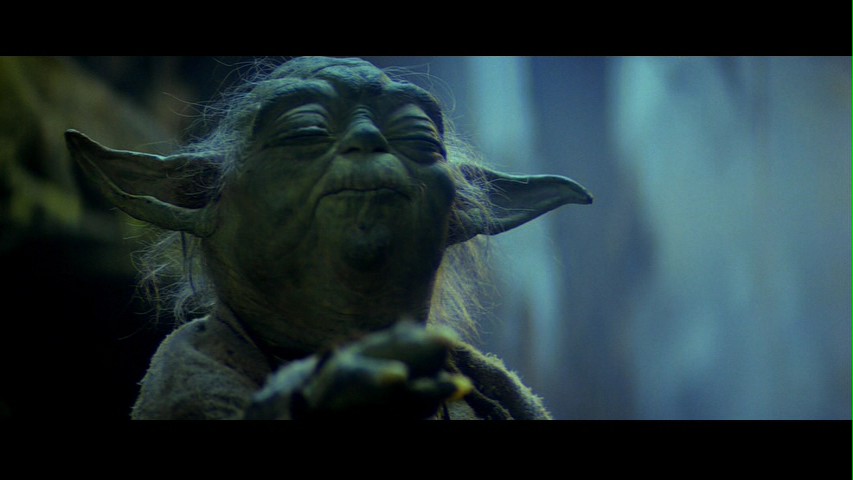
Hence the words of wisdom from the Jedi Master in the title. The above video was really illustrative to me of the difference in style of play, and how potentially freeing and liberating this could be.

The other thing that really hit me (and from what I see and know this is one of the hallmarks of new school indie games) was how the roles between players and GM have been reversed in some ways.

In old school games, the GM is the one who creates the story, tells the players what is happening, and so on. It's a proactive role. The players then are placed in a reactive role where they respond to what the GM tells them or does, rinse and repeat (perhaps an oversimplification here, but more or less).

What was really striking for me in the above video is how much the PLAYERS drove the story and wove the narrative, and how in many ways the GM role was more REACTIVE, asking lots of (leading) questions as a means to drive the story, rather than TELLING.

I'd heard this was the rap on newer indie design, but this made the whole concept "click" for me.

Of course this may all be irrelevant in Solo, as technically you're wearing all the hats to some extent(or emulating another hat wearer in others), but I think it's useful to understand the play style and how the game(s) function so that you know exactly what it is you're emulating.

Speaking of which, I have more thoughts on that, but I'll save them for next time. :) 

Wednesday, February 3, 2016

Ever Meet A Game That Just Speaks You?

Don't judge me...
Well, I'm back. Maybe. I guess. The time between Thanksgiving through New Year's/end of January generally suck for me. I tend to put all my projects on hold and generally go into lurker mode/ go dark online during those times, so apologies to anyone finding my digital doodlings interesting.

Speaking of going dark I've been looking over the usual suspects in terms of RPG'ing (all of whom I've discussed previously), considered different things for them, but nothing has been grabbing me.

Somehow, over the weekend, I ended up stumbling over Monsterhearts and giving it a closer look. I'd heard of the game before, but casually dismissed it both because of it's subject matter, and being labeled as a "story game".

Both of these turned out to be a mistake. Taking a closer look at this, it resonated with me, both in terms of theme, and mechanics. Looking at the Giving and Getting Threads on other characters mechanic, putting Conditions on each other and so on, I "got" Story Games in a way I haven't before.

Normally I'm a moderately rules crunch guy, with a very 80's pedigree in terms of actual games I like and styles of play. And even though this one is a very rules lite affair, I really like how it very mechanically codifies social interactions, which is what the game is all about. Plus the idea of a less mission/combat/objective oriented game and one that is more loose, improvised, free form, storytelling and drama oriented is just appealing to me at the moment.

SO, here I am, looking at attempting to run this thing Solo. Madness? Maybe. But as I mentioned in the title, it spoke to me. One thing I've noticed in my Solo RPG career thus far is that I seem to like solving problems to challenges of things that "can't be done" in Solo. Thus, here I am contemplating running a story game that thrives on social dynamics and interaction as a solo. *lol*

I've improvised a few off the cuff scenes, (just picking a couple characters, a setting, a situation and GO), bouncing interactions off my favorite tools for that very thing: The Mythic Game Master Emulator and UNE Universal NPC Emulator and very satisfactory results, so I'm convinced that my mental proof-of-concept on how I'd like to approach this is valid.

In the meantime, I've been furiously scribbling "keyword" style hooks of just ideas, themes, and so on. Gathering Skins and materials. Listening to and reading Actual Plays and Session Reports. Just getting into the "mood".

I have a lot more to say on the subject, but I'll save that for later as I've got the time and opportunity and enthusiasm to do some prep right now!


Sunday, November 8, 2015

You down with (Gamer) A.D.D?


Yeah, you know me...


Gamer A.D.D. (Attention Deficit Disorder). It's become a running joke in gaming circles. It's funny, although I worry that it in some way trivializes REAL A.D.D. (which is certainly not my intent).

In any case, it's become a shorthand for being easily distracted from one's current RPG pursuit(s) by the "new shiny". The proverbial "grass is greener on the other side" syndrome.

While I'm still firmly committed to getting a Supers game off the ground, I'd be a liar if I said there aren't other games tempting me. As a Solo gamer now, I feel like I (we?) am/are even more vulnerable to the dreaded Gamer A.D.D, as with a group, once everyone is on board with a game, usually it takes on legs of its own and the train keeps rolling. I'd say there's not a lot of suddenly skipping from one game to another on the whim of one person in a group.

In any case here are a few of the other Games I'd Like To Play:

My sci-fi crush
 "White Star", oh how you tempt me. Ever since I picked this up just for the intent of adding material to the Star Trek thing I was tinkering with, it has pulled at me strongly to do as a stand-alone thing.

I love the "generic with the serial numbers filed off" vibe of it. I could totally see playing in a style of the cheesy post-Star Wars sci-fi movies of the 80's, like Battle Beyond the Stars, Starcrash, The Humanoid, The Ice Pirates, or Galaxina, which I love. (Just like in my mind, all of my D&D sessions look like the cheesy post-Conan fantasy flicks of the 80's like Hawk the Slayer...)

With the recent release of White Star supplement Five Year Mission the urge is as strong as ever. It even gives me thoughts of the Trek thing AGAIN...
tempts me to Trek on again


The recent trailers for the new Bond flick "Spectre" got me to thinking, I haven't played a modern action/adventure game in a LONG time, not since Hero Games "Espionage" back in the 80's. But I was a BIG action adventure guy back in the day, eating up flicks like "Die Hard', "Lethal Weapon", "Rambo: First Blood Part II", and a particular favorite "Commando".

Even my choice of reading material back then skewed to the Men's Adventure novels of the 80's like Mack Bolan (the Executioner), Able Team, Phoenix Force, and so on.
Meet the guy who inspired Marvel to create "The Punisher"


So I was curious to see what kind of Spy &/or Action/Adventure games were out there. Though the modern digital age has been a huge boon in the options of readily available, affordable, gaming material, it can also be a BANE too, in that it can be an enabler of one to give in to the urge to ACQUIRE and COLLECT, especially since they are, y'know, so readily available and affordable...

ANYWAY, after shopping around, two games caught my fancy for simple and rules light that look like they'd be a lot of fun that I gave in and picked up, "Covert Ops" and "Dogs of W*A*R", the former being aimed at a more espionage bent (though it looks like it would really cover the whole gamut), while the latter is firmly aimed at those Men's Adventure novels I mentioned earlier.


"Covert Ops"in particular has really got me enthralled. There is a lot of ideas and good game crammed into that rules light package. All of the Random Generators for Major NPC's, Enemy Organizations, Master Villains, Missions, and Security and Traps alone are worth the price. I can already REALLY see running it RIGHT NOW, as a very zero prep, pick up and play, stand-alone adventures type thing, not unlike the Mini Six powered "Monster of the Week" thing that I still want to get back to at some point.

Another genre that I love is the Western. It's a genre that I'm intimately familiar with, having grown up at the tail end of the the heyday of the T.V. Western, and having a Dad who's a fan of the genre instilled a love of Cowboys and Gunslingers in me that has endured, so as such I've had an idea for a "Boot Hill" sandbox for some time that I'd still love to explore at some point.

SO, back to the titular subject of Gamer A.D.D, I wonder if as a Solo gamer that this couldn't end up being a POSITIVE, as we're really free to jump around, experiment, and play whatever we want, WHENEVER we want.

The biggest challenge for me is just to get past that feeling that I'm "cheating" on one game with another, or that I'm "abandoning" one game for another.


I tend to be a absolutist in my thinking, AND in my hobbies and gaming. I'm a real "all or nothing, all in" kind of guy. That's something I'd really like to get over, as when I look at the images posted of so many great games, I really want to make room for them all in my gaming life.

Wednesday, October 28, 2015

Superhero Open World Sandbox Hexcrawl!

Let's play!

So this post may be a bit all over the place and random, as my thoughts are a bit scattered on the subject, but I will at least try to cram as much stuff in as I can that I have located on the subject of, and that I'd like to use for, a Superhero Open World Sandbox Hexcrawl, along with my ramblings on the subject.

First, I had a bit of a revelation in the past couple weeks thinking on my beloved Champions. I have a suspicion that one of the great unsung heroes of Champions game design could end up being a crucial piece of the type of game I'm looking to play. I'm talking about Disadvantages.

If you're not familiar with Hero System games, character creation is a point buy system. You're given a starting number of points for free, but in order to have enough to build an average character you have to make up the balance with Disadvantages. It's a neat system that helps build a background for your character while handing the GM juicy plot hooks.

There are a couple of types among the various Disadvantages that I have in mind in particular. These are Hunted's and Dependent NPC's 

Hunted's are individuals or organizations that are actively pursuing your character. Dependent NPC's are those regular folks who rely on the hero for their care and well being. There are a few different criteria that determine how many points you earn for both (how weak or capable they are, and so on), but the one I have in mind is FREQUENCY. Both of them have a chance of showing up each session (8, 11, & 14 or less on 3d6), rolled by the GM. An appearance need not mean combat or endangerment, just that person(s) will figure into the session somehow.

I always thought this was one of the areas Champions outshone the competition, and always felt like games like Marvel Superheros could have used it. ( Aunt May, Dependent NPC: Amazing (50). Red roll? Uh-Oh, Aunt May is going to be in danger! Maybe Green is a phone call, Yellow a personal appearance, that sort of thing).

If I end up playing Champions this isn't a problem, but regardless of system, I want to front load my sessions with a chance of Hunted's, Dependent NPC's, and the like. These could then be worked in when relevant results show up on your Random Encounter Tables (see below), or when your Game Master Emulator of choice (like Mythic GME) throws you a Random Event or an Altered/Interrupted Scene, and so on.

(This may not be much of a "revelation" for most, but it was for me, in that as kids we never really used ALL the rules from Champions (Endurance, I'm looking at you!). We were pretty lazy about Hunted's, Dependent NPC's and so on. If we were running an adventure with Genocide, and you're HUNTED by them, well, they're going to target YOU. Otherwise, we just ignored them. We we kids...)

***

Next, I'll address a question that seems to come up a lot in various online discussions I've Googled up on the subject, which is: why does a Supers game NEED a hexcrawl in the first place? It's not a bad question.

For me at least, it all goes back to subjects I've discussed in previous posts: Immersion, realism, simulation, verisimilitude. I want the world to feel REAL. INTERACTIVE. Not only do I want a GAME MASTER EMULATOR for solo play, I want a WORLD emulator as well.

It would be pretty easy to just plunk the hero down in the city and roll up a random encounter. But I want more of a city that feels like it has all these things going on around me.

SO...that said, simple random encounter tables aren't enough for me. As I'm patrolling different parts of the city, I want greater or lesser chances of encounters, types of crimes, that sort of thing. IMO this will help make the city feel REAL and ALIVE.

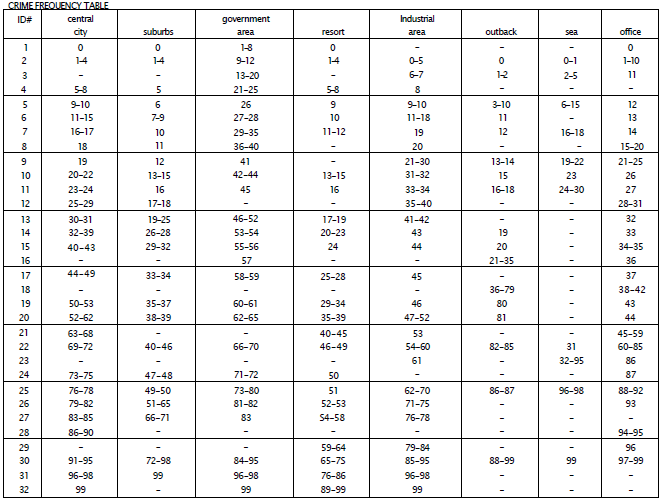
One of the games I've heard recommended a lot for this style of play is also the FIRST Supers game: Superhero 2044. It incorporates planning sheets for you to block out how your hero spends their time and charts to roll on for patrols and so on. Very simulation-ish. Okay, sounds promising.

I managed to track down a PDF. The results...? Well...I got a headache, and a couple of nifty charts anyway...


I won't go into much detail on how these are used in the game, as I STILL don't quite grok how it works, other than to say it all boils down to a random die roll to see if you stop the crime, make a conviction, and so on, with a bunch of modifiers and mathematical formulas. Snore.


BUT, that chart for determining types of crime by area patrolled is pretty awesome. It reminds me of another one I found at Republic of Replicants from the DC Heroes RPG supplement Night In Gotham:


Add that to this map from IO9 that is keyed with the 24 boroughs on the chart above:


And you're off to a great start on prowling the city looking for crime.

***

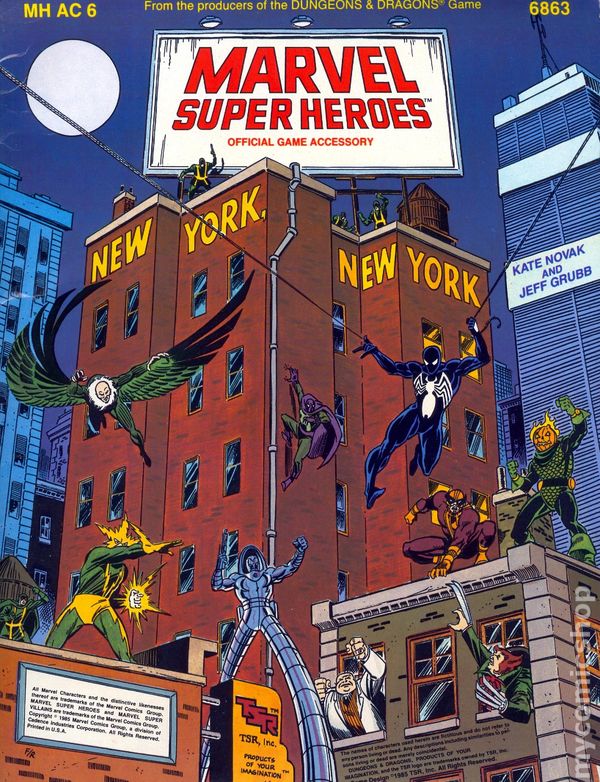
Marvel Superheroes has a pretty good one too, in the accessory New York, New York
that you can get for free at Classic Marvel Forever

This one runs more of a gamut, incorporating Daily Life, Miscellaneous Crimes, Robberies, Burglaries, Rampage, Vendetta, Organized Crime, and Catastrophes. It's closer to what I think of as a Random Encounter chart.

Which brings me to Random Encounters. I have nothing against them. Heck, I love them. I think they're just the spice a sandbox needs. So while the ones above and to the right would be good for "hex stocking" tables as you move through the city, I also think a Supers Open World Sandbox Hexcrawl would need true Random Encounters.

In my mind the Random Encounters in this type of game would be more of your "big" encounters. Supervillain attacks, Alien Invasions, and so on.

Fortunately there are several good ones I've scoured up in my  searches of the internet like the DC Heroes RPG one linked to above at Republic of Replicants or here's a good one for sale at Drive Thru RPG...

Worlds of Pulp: Generic Random Event tables for Super Heroes


The thing that makes the Wandering Monster/Random Encounter work in D&D is the simple 1 in 6 on d6 (or 1-2 in some cases). So I'm picturing something like that here. Each "hex" (borough, neighborhood, whatever) you move into or through you would check on your Patrol Encounter Table. No crime in the area? Roll for Random Encounter. If one is generated, roll on Random Encounter Table.

I haven't decided on frequency though. In D&D, for Wilderness you check 3-4 times per day. In a Dungeon it's every other turn for Wandering Monsters. Every other "hex" could be a good metric here?


***

So, overall the basic procedure would look something like:

1. Check for Hunted's, Dep NPC's etc. at beginning of session.
2. Roll on Patrol Encounter table for each "area" moved through/entered.
3. If no Patrol Encounter generated, roll for Random Encounter every other "area".

Between this procedure and all the randomness your GM Emulator of choice (like Mythic) throws at you, plus any and all other oracles you might employ ( like Rory's Story Cubes) SOMETHING has to happen! If not either you're not looking hard enough for trouble, or it just wasn't meant to be. Go back home and go back to bed.

Needless to say, all of this is only if you're just out patrolling the city, on your way to work, whatever. If you have a specific mission or agenda from a previous session or whatever then obviously that would take precedent (unless you WANT to add the chance of added complications. Could be fun!)

***

As a bonus, here is my collection of all the most useful blog posts and downloads that I've gathered on the subject (in addition to the ones already posted above!).


Blog post on Superhero Sandboxes by Jeff Rients

Alien Shores blog posts on Sandbox superhero campaigns (3 parts. Recommended!)

Rogues and Reavers blog: New York, New York inspired Campaign Frames


Random Encounter Tables for GM's by Ty States

Polyhedron Magazine article collection for MSH. (Of note are the articles "Constructing a Solo Campaign" from issue 80 and "Constructing Random Adventures" from issue 91)

CRIME SCENE written by A. Bigwood QUICK SCENARIO GENERATOR FOR CHAMPIONS OR ANY OTHER RPG

Heroes Unlimited Random Encounter Table

Elfmaids & Octopi blog: River city encounters for Marvel Super Heroes

Mutants & Masterminds Random Events (pg 6)

CrimeTable+Toolkit for Icons

*EDIT*

I wasn't even aware when I drafted this list and post, but apparently +John McMullen  was already ON this track before I was, hitting on some of the same thoughts regarding Random Tables and Disadvantages back in JUNE! Check it HERE.

+StevenLincoln also gave me a tip to a great City Blocks Generator, that while intended for Sci-Fi/Cyberpunk, could work great in this context with minimum tweaking.


Saturday, October 3, 2015

...of Immersion and Verisimilitude: Pull a seat up at the Table

One of the finest examples of Old School Random Tables
Random Tables. I've made no secret of it in the past, I absolutely love them. While still high on the post from last night, I celebrated by buying up PDF's of a ton more random tables from RPG Now. (My version of going out and painting the town red, but with less hangover the next day).

While spending the day browsing all of the new acquisitions, not only was I filled with joy and inspiration (which would be worth it alone even if I wasn't actually using them in play), but I was also suddenly hit with another trendy word from video game design:  Immersion, defined as, deep mental involvement.

While contemplating that word, another one sprang to mind, one that I'm quite fond of: Verisimilitude, or something that gives the thing into which it is integrated the appearance of being true or real.

In this case, it is Random Tables, as many as I can get my hands on, from as many sources as I can, crammed full of all kinds of little nuggets of inspiration and ideas that I wouldn't have come up with on my own, that I can stash away until needed, unremembered, and in most cases UNREAD, that give me the deep mental involvement and appearance of being true or real that helps create for me another of those words mentioned last post: Simulation.

Now the same may or may not work for you, but I think it is worth consideration that you find whatever that thing is that gives your games a sense of Immersion and Verisimilitude and include it.


Friday, October 2, 2015

...of Simulations and Sandboxes

By George, I've GOT it! (I think...)
While stuck at work on a slow Friday night, I've been mulling over the "What I Want To Play" series (#4 is sitting half finished in draft now), D&D, & RPG's in general, when I had another minor epiphany.

While thinking on some of the other games I'd like to play that I haven't covered yet versus D&D, two words burbled up from my subconscious that have been rattling around in my head for a couple of weeks now:

Simulation.

Sandbox.

While re-reading the 4th edition "Pendragon" RPG (one of those "Games I'd Like To Play") and looking up things online in regards to it, I stumbled across one quote that said (paraphrasing from memory) that "Pendragon was less of a RPG and more of a simulation" due to its system of Virtues and Vices to ensure that characters behave in a certain, consistent way, to their beliefs and character.

..."less of an RPG and more of a simulation." I rather liked the sound of that.

I think one of the things I've been consciously seeking, without necessarily being AWARE of it per se, is simulation in my RPG's. I want tables and rules that run the world and everything that happens in it, other than my character. (Hence my recent comment that I want my games to be "virtual reality" and that I want "to control my character, and the game to control everything else".

I know one of the reasons, among others, that I chose D&D for my first Solo was the huge amount of material available for it. Random tables for nearly any occasion and situation if you look hard enough. I think this is one of the reasons it worked so well. That kind of plethora of material powers the Simulation.

The other thing I want (that I've been more aware of) is for all of my games to be like a sandbox. Less "sit down & just have an adventure" and more "go anywhere, do anything, live the life of my character". Again, this is why D&D worked so well. Plethora of material, fits the style of play.

And I think this is also why I've had such problems otherwise (except for the "Monster-of-the-Week thing, which by its NATURE is episodic, thus I DON'T want or NEED a Simulation OR a Sandbox).

The problem I've been having is I want a bunch of the other games I'd like to play to be Simulation Sandboxes.

Star Trek? I wanted to live the life and career of a Star Fleet officer fresh out of the academy with an open world space sandbox to explore and unfold around me.

Superheroes? (Another genre I'd like to be playing) I want an open world sandbox simulation city where my character can and go and patrol like Spider-Man and crimes, events, and THINGS just HAPPEN, while maintaining a personal life, a secret identity, and so on.

Now, to be fair, I have scoured far and wide on ye olde intrawebz, and HAVE acquired a fair number of resources for both of the above (and maybe a few others). Supers in particular I was able to amass a decent collection of "stuff" to enable this type of play.

But for some reason I think I've had a harder time of wrapping my head around a "hexcrawl" sandbox-y style of play for the above. (Though I feel like I'm close to a breakthrough on a Supers game...there's something in my subconscious that just feels like the pieces are ready to fall into play and make sense...)

With D&D, there is so much material available, and sandboxing and hexcrawling are such well trod paths, that it wasn't a huge stretch to get started, to figure out what to do, or how to do it.

With others, even though there IS material available (as stated above), there is still lots of prep to be done, and the style of play for these genres feels like strange, uncharted territory, that when contemplating, I've had trouble figuring out where to start, how to approach.

I don't know if I have any point to make. Just thinking "out loud" here. But I think quantifying and qualifying, putting a label on,  what it is you're trying to do in Solo RPG-ing (and maybe life in general, really) helps in some way to accomplish it. When you do so, it clarifies, sets guidelines, expectations, helps identify what the challenges actually are.

Maybe now that I have a clearer idea of what it is that I really want to do I'll have an easier time figuring out how to do it.


Sunday, September 27, 2015

WHEEL...OF...FORTUNE!!!

While reading the Stephen King memoir "On Writing" I came across the following fascinating tidbit...


Intrigued, I hit Google. I did not find an example of Wallace's Plot Wheels as I'd hoped, but discovered another interesting user, Erle Stanley Gardner, who wrote 119 novels of  the cases of lawyer/detective Perry Mason using a variety of plot wheels to provide twists and turns, as detailed HERE.

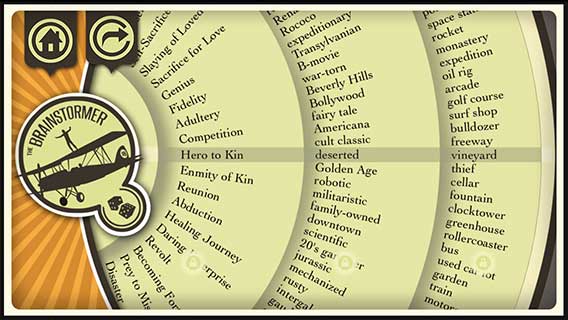
Interestingly enough, there is a link in the blog featured above the leads to the website of a Plot Wheel app you can buy ("The Brainstormer") HERE or try out the online version free HERE.


I find it encouraging and pleasing that have not only best selling writers employed methods not unlike our own, but that such a seemingly "new" innovation has actually been kicking around at least since the 1920's.

Saturday, September 19, 2015

Emergent game play and narrative, a subject worth consideration


In the board game world is where I first learned the term "emergent narrative". There are many pseudo RPG-like board games (like A Touch of Evil :The Supernatural Game) where random elements converge and a form of story emerges from these random details.

Apparently the terms "emergent play" and "emergent narrative" came out of the development of video games, as you can read about in this Wikipedia article, which explains the whole concept in more detail.

Oddly enough, as much as I've discussed solo RPG'ing, it never really occurred to me that this thing and process that I've been struggling to describe, help others with, and implement myself, is really the same thing that I'd encountered and discussed in my other gaming endeavors.

I raise this point appropriate of nothing, other than I think it puts things in the proper context to realize what we're engaging in, when we solo role play, is a form of emergent play, where we're take random, disparate elements, and allowing a coherent narrative structure to emerge.

I don't know if I have any other point, other than having a useful frame of reference when discussing solo RPG'ing, and when considering the process ITSELF. I think it clarifies and crystallizes a something that I've struggled to put into words. The play itself is part of the process. The process itself is part of the play. And the narrative is what emerges.

Friday, September 18, 2015

Baby steps

...one step at a time
As a Solo RPG'er, I've had to learn many lessons over and over. Remind myself of my own advice again. This might be perhaps chief among them.

As a soloist, it is incredibly easy to get overwhelmed. If you are dealing with real life issues  even more so (such as the ones referenced in my previous post, or whatever RL issues you might struggle with in your own lives).

Being a solo player means it's a one person show. (DUH!) Thus all the "work" falls on you. (IF you let it! How much work should there BE? Is it possible to make the work a part of the PLAY? To do mostly play with no work? Topic for another post I think...)

In any case, my recent bout of frustration led me to thinking about my process, and where I went astray.

I think as soloists we're probably all big dreamers in some way. After all, we're all playing RPG's for starters! Add to that we're attempting to do so SOLO, which is a big dream in and of itself, since there are plenty of people who thought (and still think) that it can't be done.

If you're like me, you live in your head a lot. You think a lot. So with all this thinking and dreaming it's easy to get lost. To go astray. To loose sight of what you were trying accomplish, and overwhelm yourself by dreaming big, without having actually DONE much of anything.  (Again, maybe a topic for another time).

Back to the topic at hand...

...not quite

...I do think it's important at some point to just jump in and play (as many wonderful respondents on the previous post reminded me). I ALSO think it can be important to take each thing as it comes, one step at a  time...

...also not quite
..and deal with each problem, each situation, as it arises. I think that was one of the reasons that my most successful solo campaigns to date DID work. That I DIDN'T think about it too much, DIDN'T plan it out, and DIDN'T prepare a bunch.

I did think about it quite a bit at first, just getting stuff together and figuring out my approach to the whole process, since it was my first solo endeavor, but eventually I had to just jump in and DO it.

AFTER THAT came the process of taking each situation and problem as it arose, figuring out ways to solve it, and continuing.

Maybe easier said than done, I know. But I think (for me at least), that I have to come to grips with the idea that solo RPG'ing, if it's going to be something that I do, has to be an elephant that you eat with a teaspoon, not all in one bite.

...don't worry, it's just a cliched metaphor.

Tuesday, September 8, 2015

Why ya gotta go and make things so complicated?!?

NOT YOU!!!
Work, life, and all the other aggravations in-between have gotten me to thinking perhaps I bit off more than I can chew when it comes to the "Star Trek-y" thing I'd been contemplating. My reach may have exceeded my grasp.

In addition to all the other daily issues one normally struggles with, I am a chronic Depression sufferer, which means it is often hard for me to find motivation or enthusiasm for much of ANYTHING at times.

Add to this trying to tackle a project out of my league (at the moment), with a lot of prep work required, and that just makes it worse. Then add guilt at thinking about dropping it, and it gets worse. And so on.

But the truth is, the more I think about it, the less enthused I currently am. All of the prep, and everything else that goes along with, is feeling like work. Work isn't fun. Thus exacerbating the issues above.

I'm starting to come to grips with the idea that, for now, I would really like to just PLAY and not do a bunch of campaign work.  That I should probably settle on one "out-of-the-box" system. Same for campaign setting, or at least one that I know intimately, or by default (modern), or emerges from play (D&D sandbox).

I think I need to lay off the home brew for now. It's too overwhelming and is standing in the way of actually getting something going. SO...I think I'm putting that project on hold for now, and may try to get something going that I can just improvise and freestyle better. More on that later.

Wednesday, August 26, 2015

Describing an elephant


Once upon a time, there lived six blind men in a village. One day the villagers told them, "Hey, there is an elephant in the village today."
 They had no idea what an elephant was. They decided, "Even though we would not be able to see it, let us go and feel it anyway." All of them went where the elephant was. Everyone of them touched the elephant
"Hey, the elephant is a pillar," said the first man who touched his leg.
"Oh, no! it is like a rope," said the second man who touched the tail.
"Oh, no! it is like a thick branch of a tree," said the third man who touched the trunk of the elephant.
"It is like a big hand fan" said the fourth man who touched the ear of the elephant.
"It is like a huge wall," said the fifth man who touched the belly of the elephant.
"It is like a solid pipe," Said the sixth man who touched the tusk of the elephant. 
They began to argue about the elephant and everyone of them insisted that he was right. A wise man was passing by and he saw this. He stopped and asked them, "What is the matter?" They said, "We cannot agree to what the elephant is like." Each one of them told what he thought the elephant was like. 
The wise man calmly explained to them, "All of you are right. The reason every one of you is telling it differently because each one of you touched the different part of the elephant. So, actually the elephant has all those features."

I am reminded very much of this story when it comes to trying to describe playing RPG's solo. Explaining the process is very much like the blind men trying to describe the elephant. Each of us are feeling a different part of it.

Taking something ephemeral, an intuitive process, and trying to describe it comes out a bit like their description of the elephant I'm afraid. Trying to take something that is a bit of a subjective truth, and render it as on objective truth, can be difficult.

Apropos of nothing, just something I've been thinking about. :)

Saturday, August 22, 2015

Do Eet! Do Eet NAOOOOWW!!!

"Do It! Do Iiiiiiiit!!!"

I had a few different titles in mind for this post. "Nothing to fear but fear itself", "Spread your wings and fly", "Got the nikes on, just do it", etc. But this simple, brutal, direct little ditty by Mr. Rollins & Co. gets the point across the best IMO on a subject I plan on discussing further in future posts:

Getting started in Solo RPG'ing.

It's a daunting proposition I think. Just like the whole concept of "role playing games" was new and uncharted territory to many of us way back in the 80's, Solo RPG'ing is still a pretty new and "far-out" idea now.

Role playing games took a change in mind set. A change in perspective. As silly as it might sound and seem now (even to me, and I was there!) we had to figure out the "how" of how to play these strange, new types of games with the funky dice.

I think the journey toward Solo RPG'ing takes a similar type of shift in thought, "unlearning (some of) what you have learned", and so on.

(I'm assuming here, of course, that you have heard of or learned about Solo RPG'ing, some of the tools involved, & so on. If not, hie thee hither to the G+ Lone Wolf Solo Roleplaying Community and then come back when ready).

My purpose here is to address what was MY single biggest hurdle, and from other posts that I see one that I think others struggle with as well: how to start, where to start etc.

And my biggest, best piece of advice (for now) is just as Hank says above: Do it. Don't be afraid of "doing it wrong". Don't be afraid to tinker. Try things out. Experiment. Practice. Do some trial runs. Start over if at first you don't succeed.

Sitting down & simply getting started, problem solving as I went, just taking one piece, one challenge at a time, figuring out what I needed to do in order to get done what needed to be done, was the single biggest breakthrough I had. Once I DID IT, all the pieces fell into places (more or less).

I have lots more to say on the subject, but all in good time. :)

I'm here 'cause I got something to say...

"Happy Halloween ladies!"

First post! Hurrah...

If you're reading this, it might be due to the fact you have some interest in my inane ramblings from previous posts on G+ or around Teh Interwebz. If so, I thank you and hope you'll find something of interest or use. :)

This is a huge step for me, and something that I've contemplated off and on for a while. What finally prompted me to take the plunge is that I feel like I have a lot to say, on a lot of subjects, that may not fit into the standard community postings per se. Sort of rhetorical "sound of one hand clapping" thoughts, session reports, whatever, that aren't necessarily aimed at anyone in particular, or in need of a response (though comments are more than welcome!).

Anyhoo, we'll see what we see. :)